1993 - II

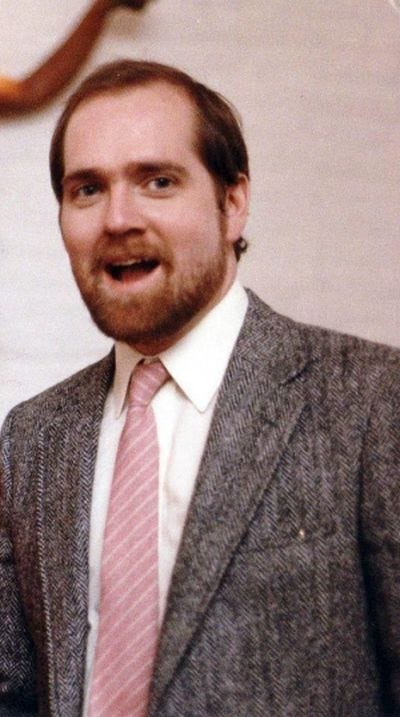
For several summers I led a non-fiction writing workshop in Paris. I’d say I “taught” it but you don’t teach writing – it can only be learned. My students were mostly American women, seriously wealthy, corporate and diplomatic wives hoping to extend themselves and redeem their time abroad. Each year they turned up with impenetrable essays about their gardens and their grandfathers and that summer in Maine, jumbled all together and looking for a point. I asked them to pick just one topic – garden, grandfather, Maine -- and to start over from the top. “Just start writing it,” I directed. “Don’t explain what you’re doing.” For a week, we worked only on first paragraphs.
“The start of any piece of writing is everything about it,” I went on. “Your first lines contain all that will follow and nothing coming later can oppose or contradict them.” When the course was finished everyone had a clearer idea of where they were going and they certainly knew, better than they had, how hard it is to get a story moving.
“Stories are like houseplants,” I suggested. “You just need a cutting to get them started. Then you water them with tears.”
Well, I had to say that. I was paid to be clever, and in those last summers before HIV caught up with me it was something I could still pretend to do.
How should I detail further the story of my pitch into darkness? How can I make it instructive? I’m not a writer like others are, enrapt with language and deepness and poetry. In my career, believe me, I was only ever hanging on. I’m amazed by people who say that they need to write, that they can’t help themselves; they’re mesmerized, too soulful and sensitive for anything else. I feel like Pia Zadora next to them. I have a small talent, as some artist said, and that’s harder than a large one. It should be my epitaph.
But I did leave a mark. I even made it onto Page 6. My book reviews especially were a hit in New York, where I was known for my “sharpness” and “wit.” I took down Georgette Mosbacher for The New York Observer:
I’ve got to admit I’m of two minds (if mind is the word I’m looking for) about Feminine Force: Release the Power Within to Create the Life You Deserve, Georgette Mosbacher’s bubbly foray into the world of self-improvement. On the one hand, I can’t believe I’ve finished reading a book as gushy, imperturbable, hastily written, and retro-bimbo as this. On the other, it’s a relief to spend time with an author who isn’t complaining, hasn’t got an ax to grind, doesn’t hate anyone, wasn’t molested as a child, and never went to a treatment center for drug addiction, co-dependency, or low self-esteem. I feel Georgette should be rewarded for her success. I feel, indeed, that she deserves the life she has. She’s earned every one of those power lunches, every one of those houses and gowns, those cars, those jewels, those shiny incisors, and that big red hair.
Then JFK, Jr., before his marriage and untimely death:
John F. Kennedy, Jr., the hero of Wendy Leigh’s brain-dead Prince Charming, has never done anything in his life to deserve a biography. He has especially done nothing to deserve this biography, and I like to think that if he ever reads it he’ll be laughing his handsome head off. Ms. Leigh’s portrait of the Handsome Hunk, one of People magazine’s “Sexiest Men Alive,” the boy who saluted the coffin, threw food at his classmates at Andover, was allergic to horses, wore a Beatles haircut, “found himself” in India, chipped his ankle once, flunked his bar exams twice, may or may not go into politics, or dream of being an actor, or marry Daryl Hannah, but who anyway is “too straight” for Madonna -- where was I?
And it went on – the snarky essays and columns, the dates with dowagers, Park Avenue dinners, and sex in the shadows. One night with Gloria Vanderbilt we were talking about hot tubs -- yes, intellectual conversation -- and she said she never liked to use them, at spas and so forth, because she was sure they all had “sperm wiggling around in them.” Before I could say anything she asked if I thought she should change her literary agent. He had only got her a half million dollars for her new novel, the one about Starr Faithfull and her infamous sex diary, now greatly reimagined and tarted-up by Gloria. She talked about sex all the time, one night bursting out at the dinner table, in reference to black men, “But their asses are built higher than ours! Their ASSES are higher!” I don’t know why I never asked her outright, “Is it true that you and Nancy Reagan gave a blowjob together to Frank Sinatra? Because that’s what people say.”
But I liked Gloria. She wasn’t a fool or a flibbertigibbet, not just “a lunatic who paints,” as one of her (former) lawyers described her in a magazine article. When we met she was still heartbroken over the death of her son Carter Cooper, a suicide and the twin brother of Anderson. She told the story of Carter’s death over and over, wrote about it, consulted a swarm of shrinks and psychics, and channeled her grief into numberless projects of a creative nature: painting, sculpture, novels, memoirs, and drawn-out letters to her friends, page after page of reminiscence about the day that Carter had died. She had been reaching for his hand when he fell, or jumped, from the 14th-story terrace of her apartment in Gracie Square and that moment, when she imagined she might have saved him, propelled her forward in her work. I don’t know how she found the time to do all she did. She had an assistant, Nora Marley, who answered whenever I called — this was before cell phones — and roundly called out, “Hang on, Mr. Kurth, I’m searching the rooms!” I met bunches of people at Gloria’s parties, some of them greatly famous but most of a more local celebrity, people like Ned Rorem, Jule Styne, Phyllis Newman, and always the Eberstadts, Freddie and Isabel, she the daughter of Ogden Nash and he a Long Island socialite, the two of them ever game and amusing in the way you might expect it from peripheral characters in a novel by Muriel Spark. I confess to some nostalgia for Gloria’s dinners. They were like no other and I was at many, up and down the East Side.
From a letter to a friend, 1993:
If you were going to a party tomorrow night at Harry Winston (jewelers) on Fifth Avenue, with a man who designs clothes (privately) for the wealthiest ladies in New York (only he doesn’t call them “ladies”), and he says that a friend of his is going to be there who “really wants to meet you” and she’s a “Princess Fürstenberg,” what would you wear? Inviter says “jacket and tie” but jacket and noose sounds more like it. Everyone else who’s going is named Bonky and Maisie and Pooh, etc.
It turned out that Princess Fürstenberg was from Texas, an oil heiress, nicknamed “Titi,” and like most richissimes she never stopped talking:
“Who are you?” she says (more or less), and before I can answer she moves on: “What are you doing here? Do you really think she was Anastasia? How exciting! I was in Russia once. Do you think they’ll make it or will they all just kill each other? My favorite story when I was a girl was `The Little Mermaid.’ Did you buy any of those divine lacquer boxes while you were in Moscow? Icons? Have you met my friend Mr. Drexel? Mrs. Drexel was in a production of Hair, isn’t that sweet? But she didn’t take her clothes off. Right now I’m reading a book about King Arthur. Well, it’s all royalty.”
So it was a relief to get to Harry Winston and just look at the diamonds.
PS: Arriving at Beekman Place I got chewing gum on my shoe....
Sartorially, I often came to grief at these affairs. I had dinner with Tammy Grimes and her husband Richard Bell and came home covered in cat hair, white against my dark jacket. Hope Cooke, the former Queen of Sikkim, knocked her drink in my lap, and so forth. I had no heartfelt or intimate connection with any of these people. I was ever just a guest, a walker on my own:
October 29, 1993: Holed up writing -- living the life of a mole -- enjoying isolation for a few days. Went out after lunch to buy a color monitor for the new laptop computer and ran into a Hispanic-looking woman in the elevator around the 28th floor.
“Ay, ay, ay!” she suddenly cried. “I have forgotten my keys!”
“I do that all the time,” I said.
“Twelve years I have been in this country,” she went on, “and I feel that I am 120 years old! Every day I look into the mirror -- “
“Stop!” I said. “You don’t look 120!”
“Inside,” she said, beating her bosom, “inside!!”
And that was my story. I had turned 40 in July, in Paris, where I fell in love with the man I consider to be my last Big Crush. He was younger than I, but not grotesquely so, just enough for me to picture him as an innocent in the world. Please understand this was mostly imaginary because our union never came to be. I have endless journal entries recording my distress over this person, who was already coupled and otherwise too occupied to follow me around. On our last morning:
I’m drinking him in, his smell and look and eyes and hair, but we don’t touch, just stand at the window and talk ... we’re close and don’t touch, but I know what I know, I know when someone’s excited -- he was -- and when the air is charged with closeness and longing. So at one point, as I’m getting my things ready and winding things down, I come up behind him and take him by the shoulders and say, “You’ll keep in touch with me, won’t you?” And he answers without any hesitation, “Yes.” I say: “You will?” He says: “Yes.” And I leaned down and kissed his neck, and would live forever in that moment if I could, in the memory of that closeness -- but so quick!
It would be four or five months before I unraveled completely. Still, I count that trip to Paris as my point of collapse.
"I have a small talent, as some artist said, and that’s harder than a large one."
You've still got it, kiddo. >grin<
I was in that same city at that same time and feel fortunate to have missed Titi.